

Brontë Country
Updated: Oct 4
Around 12 years ago, Nicole and I travelled to Suffolk to stay with friends. To break up the long journey, we booked a hostel room in the large Yorkshire village of Haworth. We didn't know much about the place but the photos looked nice. After checking in to our digs, we headed out to explore the central area and the toot of a stream locomotive rang out.
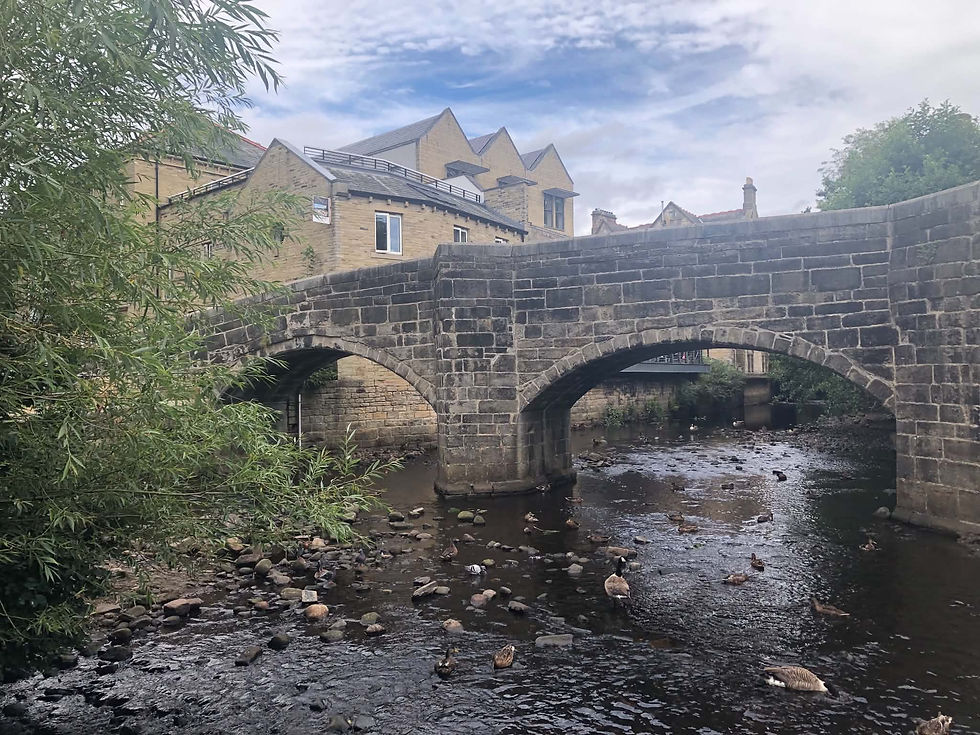
I knew instantly what I would be doing that afternoon! The heritage operation to Keighley was in full swing and I purchased a rover ticket and jumped aboard. That left Nicole with the issue of how to fill the remainder of the afternoon. We met up later and I discovered she had chanced upon the Brontë Parsonage Museum, dedicated to the trio of sisters who had set English literature alight with their Victorian-era novels. Their careers burned brightly, but briefly. All three female siblings succumbed to serious illness and passed away between the ages of 29 and 38. Brother Branwell - himself at one time a literary prospect - also died in his 30s. More about him later. The complete family story has even more twists and turns and the tragic saga captivated Nicole. She went on to read several of the Brontë books and watch the various film adaptations. We had of course been aware of titles such as Wuthering Heights and Jane Eyre, but the stopover in Haworth prompted a more detailed investigation into this dynasty of classic fiction. We had long talked about a return visit to the village and this year we made it a reality. On the way home from our holiday in Wales, we headed along the M62 - a scenic route through the Pennines - and pulled in at Halifax for two nights. The former mill town has a population of 90,000 and would serve as a useful base. Our Travel Lodge was located within the Dean Clough cultural complex - a former industrial site home to the Crossley Carpet empire. 16 Victorian buildings have been renovated following the closure of the textile works in 1982. The amenities include shops, restaurants, theatre, art gallery, event spaces and co-working facilities. Our 52-room hotel offered the usual Travel Lodge furnishings, which are more than adequate in my opinion. The building was uncomfortably warm inside, due to the long heat wave that had penetrated the thick stone walls. Modern safety regulations don't allow guests to open windows more than a few millimetres. No big duvet required tonight then. We enjoyed a nice dinner in the adjacent Thai restaurant to celebrate our 18th wedding anniversary. Haworth wasn't our destination for the next day (Tuesday) as the Brontë Museum would be closed. Instead we drove early in the morning to Hebden Bridge - a charming market town just eight miles away, situated at the confluence of the River Calder and Hebden Water. Weaving was the main source of employment until the decline of the trade in the 1970s. Then town then took on an alternative new-age feel, following an influx of artists, musicians and writers. We enjoyed breakfast in a local café and Nicole browsed an independent craft shop - just one of many artisan traders in the town centre. We sought out The Book Case, which stocks a wide range of titles. I purchased a book about the UK Postal Paths, formerly used for mail delivery on foot in remote areas before the arrival of reliable road connections. After dropping into the traditional sweet shop, we sat on the river bank by the historic packhorse bridge (built circa 1510) and watched the birds.

Hebden Bridge is an excellent place to while away half a day. In the afternoon, we checked out Hardcastle Crags - a wooded valley leading to the early 19th-century Gibson Mill. The site is maintained by the National Trust and as members we were able to park for free. The walking trail up to the historic mill runs for a mile and a quarter along the Hebden Water. Originally built to spin cotton from raw fibre imported via Liverpool, the finished yarn would then be sold on to local weaving firms. Despite an upgrade to steam power, the business was ultimately unable to compete with the larger city mills and the Gibson family withdrew around 1890. After the turn of the century, the old industrial complex was transformed into an leisure hub for holidaymakers from Halifax and other towns around the Yorkshire and Lancashire. The railway had arrived in Hebden Bridge back in 1840. A restaurant was installed on the top floor and diners diners were treated to a view of the mill pond. Other facilities included a dance hall, roller-skating rink, pleasure boating, tea rooms and an ice cream parlour in one of the cottages. A hydro-electric turbine was soon installed to meet the increasing demand for power. Plans to flood the valley in order to create a new reservoir for Halifax were successfully repelled after a public outcry. Changing holiday habits eventually led to the entertainment emporium closing in 1953, but the National Trust stepped in to preserve the mill buildings and surrounding woodland. Today the complex is a popular local family attraction and I bought a cold drink from the well-patronised café when I arrived. Nicole had opted to remain in the river valley and work on her sketching. I browsed the second-hand bookshop on site and viewed the art exhibition upstairs in the principal mill building. The hydro electric machinery was also on display. From the stone bridge outside, I could look right up the steep gorge and see the source of the original water power. Back in Halifax, we opted for a cheaper dinner than the previous evening, picking up a supermarket meal deal and settling into the spacious hotel room for the night. The plan for tomorrow was to visit Haworth in the morning before heading back home up the M6. Just 12 miles distant, we soon reached the small hilly settlement that produced three of the most revered writers in the English language. The cobbled main street of Howarth is a real throwback to Victorian times and it's not difficult to mentally transport yourself back in time. There are many traditional shops and the vinyl record store added a touch of humour on its signage. The proprietor was listed as T. Venables (no, it's Tony!). Something football fans will understand.

The Brontë Parsonage Museum is situated at a high point in the village. The house was built in 1779 and Patrick Brontë was appointed as the local minister in 1820, arriving with his Cornish wife Maria and their six children. Sadly, Maria died from cancer the following year. Her sister Elizabeth Branwell moved into the parsonage to help raise the five girls and one boy. Patrick passionately believed in education as a means of advancement. He had been born into a poor Irish family but eventually won a scholarship to Cambridge University. The museum route took us through the various rooms used by the family, including the servant quarters. Many of the early writing forays took place in the dining room. Early editions of the sisters' novels were published under the male pseudonyms Currer, Ellis and Acton Bell. At the time, it was difficult for women to secure financial offers and they chose to write in secrecy, although you can see the coded references to the authors' true identities via the initials. Long before earning a living from book sales became a reality, the family was hit by a double tragedy. The eldest girls Maria and Elizabeth passed away at the ages of 11 and 10 respectively. Early death was a fact of life in the 19th century. Infectious diseases were rife and conditions that are easily curable or vaccinated against today took a heavy toll back then. Branwell's bedroom was presented in a chaotic state, befitting the lifestyle of a young man who wrote poetry and painted portraits, while developing a taste for alcohol. Our tour progressed into an extension of the original building, added during the residency of the Reverend John Wade, who succeeded Patrick Brontë. The exhibition here focussed on the life and works of the family members. As the surviving sisters reached adulthood, they worked as governesses, including spells in Belgium. Great things were expected of Branwell as the only son, but he drifted from one job to the next without showing signs of advancement. He was dismissed by the railway for accounting discrepancies and a tutoring career stuttered to a halt after rumours of inappropriate relations with the lady of the house. Anne, Emily and Charlotte eventually won critical acclaim under their own names but a grim fate lay in wait. A few months after the death of the ailing Branwell, by now addicted to alcohol and opium, Emily passed away from tuberculosis in 1848. Anne succumbed to the same affliction the following year, while seeking a sea cure in the coastal resort of Scarborough. Charlotte married in 1854 but was gone just nine months later. She was in the early stages of pregnancy. Patrick lived to the grand old age of 84, having outlived all his children. Charlotte's husband Arthur Bell Nicholls inherited many of the family heirlooms and took them back to his native Ireland. The Parsonage of course belonged to the church authorities. The Brontë Society was formed in 1893 and opened a small museum in Haworth. They hoped to one day acquire the property in which the sisters had lived. This became a reality in 1928, with local businessman Sir James Roberts acquiring the Parsonage and gifting it to the organisation.

The aims of the Society have changed little over the years. They collect, preserve, publish and exhibit material relating to the Brontës' lives and works. People come from all over the world to view the house and tread the cobbled streets of the hillside village that produced literary titans. Their works have been adapted for TV and cinema many times, starting in the era of silent movies. I haven't yet read a Brontë novel but plan to start with Jane Eyre. I did make another purchase in the museum bookshop and was offered the Society stamp inside the front cover. A couple of people ahead of me in the queue actively asked for this endorsement. It must be a known thing within fan circles. Afterwards we visited the adjacent church, where the Brontë family vault is situated beneath an internal pillar. Anne is not present, as Charlotte arranged for a burial in Scarborough to save their father - by this time an elderly man - the stress of attending yet another funeral in quick succession. We popped into the Black Bull - Branwell's old drinking haunt, but there was a lengthy waiting time for food and we decamped to a café further down the main street. I would advise anyone with an interest in fiction, or for that matter any type of literature, to spend a few hours in Haworth. Hell, even if you just know the Kate Bush song, just go. Don't expect the ghost of Branwell to lurch around the corner, but the whole place is steeped in the history of the written word.


Comments